
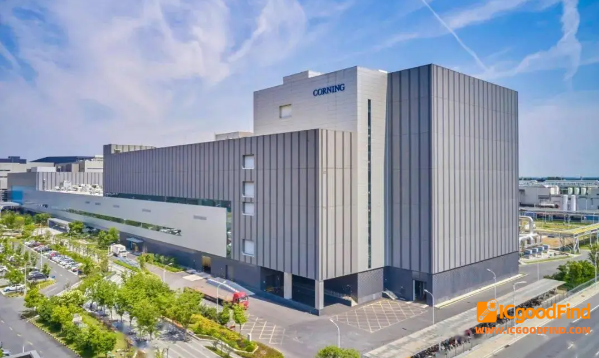
Corning, the global display glass leader, has notified customers of a price increase of at least 15% on yen‑denominated display glass substrates starting Q4 2026, citing sharp yen depreciation and rising inflation. Panel makers including TCL CSOT, BOE, and HKC have begun issuing price adjustment notices to customers, spreading the pricing trend across the industry.
Corning said the weakening yen against the dollar, combined with rising raw material, precious metal, energy, and logistics costs, has made internal cost absorption unsustainable. Industry expects AGC and NEG to follow with similar increases. Q3 TV panel fab utilization remains high at ~90% , with Chinese makers holding 70% of global LCD TV panel share – shifting pricing power.
Beyond displays, glass substrates are emerging as a promising new path for AI semiconductor packaging. As AI chips grow larger, traditional organic substrates suffer from high thermal expansion and warpage, while silicon interposers remain costly. Glass offers:
CTE ~3.2 ppm – closely matched to silicon
Nanometer‑level surface flatness
Signal loss 2–3 orders of magnitude lower than silicon
Panel‑level processing for large‑format manufacturing
Market forecasts project the global glass substrate market growing from $9.03B in 2024 to $16.81B in 2032. Pilot lines are expected in 2026, small‑volume commercial production in 2027–2028, and ~30% penetration by 2030.
TSMC, Intel, and Samsung are all developing glass substrate solutions. TSMC is partnering with Ibiden and Innolux to validate glass substrates for CoPoS advanced packaging.
Supply chain: Upstream glass blanks are dominated by Corning, Schott, and AGC. In midstream carrier manufacturing, BOE's glass substrate pilot line completed full automation in September, and WG Tech has TGV lines in small‑volume supply. Japan's DNP holds core patents in semiconductor‑grade micro‑via metallization. Taiwanese equipment makers including TiSheng, Dongjie, Leico, Zhisheng, Hualian, and Xinyun are entering the TGV and glass substrate process chain. The industry expects the transition from pilot to volume production in 2026–2027, with equipment suppliers benefiting first.
ICgoodFind Takeaway:
Glass substrates are moving from display into AI packaging – a potential game‑changer for large‑chip integration. With Corning raising prices and the supply chain building out, buyers should track TGV process maturity and glass substrate availability as an alternative to organic and silicon interposers.
