
Microchip PIC32MX450F256L-I/PF 32-bit Microcontroller Architecture and Application Design
The Microchip PIC32MX450F256L-I/PF is a high-performance 32-bit microcontroller based on the MIPS32® M4K® core architecture, offering a robust blend of processing power, peripheral integration, and energy efficiency. This device is engineered for complex embedded applications that demand substantial computational bandwidth and real-time control capabilities, making it a suitable choice for industrial automation, consumer electronics, and advanced human-machine interfaces.
Architectural Overview
At the heart of the PIC32MX450F256L lies the MIPS32 M4K core, which operates at up to 80 MHz, delivering 1.56 DMIPS/MHz. This core features a 5-stage pipeline, enabling efficient instruction execution and high throughput. The microcontroller integrates 256 KB of Flash memory and 64 KB of RAM, providing ample space for sophisticated application code and data handling. A key architectural strength is its dual-bus Harvard architecture, which allows simultaneous instruction and data fetch operations, significantly enhancing performance by minimizing bus contention.
The peripheral set is extensive and designed for connectivity and control. It includes a 10-bit Analog-to-Digital Converter (ADC) with a sampling rate of up to 1 Msps, multiple UART, SPI, and I2C modules for serial communication, and two I2S interfaces for audio applications. For timing and control, it is equipped with 5x 16-bit timers/counters and a Real-Time Clock and Calendar (RTCC). A standout feature is the Parallel Master Port (PMP), which facilitates easy interfacing with external memory and LCD displays, a critical capability for graphical user interfaces.
Application Design Considerations
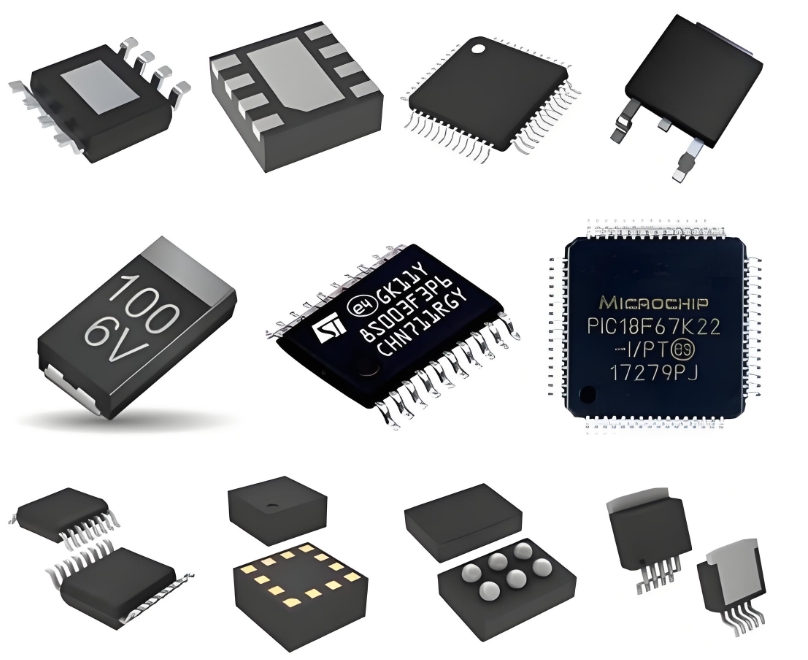
Designing with the PIC32MX450450F256L requires a focus on leveraging its high-integration features to minimize external components and reduce system cost and size.
1. Power Management: The device incorporates multiple power-saving modes (Sleep, Idle). For battery-powered applications, designers can utilize dynamic clock switching and peripheral disable features to optimize power consumption dynamically.
2. Signal Integrity and Robust Communication: The inclusion of hardware DMA controllers is vital for high-speed data transfer between peripherals and memory without CPU intervention. This is essential in applications like data logging or audio processing, where large data blocks must be moved efficiently. The 10-bit ADC provides sufficient resolution for precise sensor data acquisition in industrial environments.
3. Real-Time Performance: The microcontroller’s vectorized interrupt controller offers low-latency response to external events. This ensures deterministic behavior in real-time control systems, such as motor control or power conversion, where timing is critical.
4. Development Ecosystem: Accelerating design is made possible through Microchip’s MPLAB X IDE and the Harmony framework. Harmony provides a modular software libraries and drivers, enabling developers to configure complex peripherals like USB, TCP/IP, and graphics stacks through a graphical interface, drastically reducing development time.
ICGOODFIND: The PIC32MX450F256L-I/PF stands out as a highly integrated and capable 32-bit microcontroller. Its powerful MIPS core, combined with a rich set of peripherals like the PMP and hardware DMA, makes it exceptionally well-suited for demanding embedded designs that require both processing muscle and versatile connectivity, from industrial control panels to advanced consumer devices.
Keywords: MIPS32 M4K Core, Parallel Master Port (PMP), DMA Controllers, Real-Time Clock and Calendar (RTCC), MPLAB X IDE.

